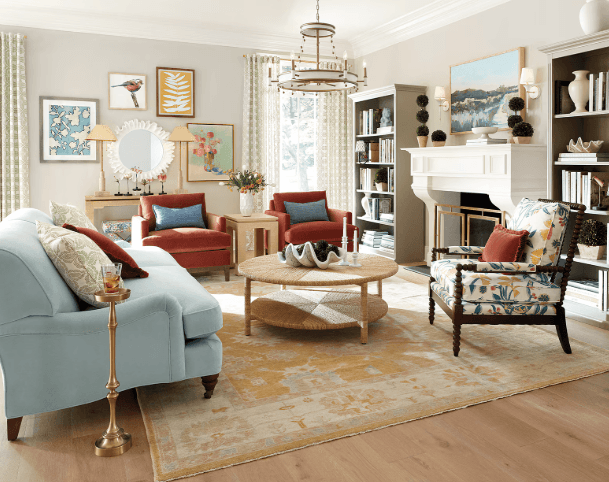
Beige has a bit of a reputation problem. Neutral homes get called “safe,” “boring,” even “soulless” by people who think every wall needs to be a statement. But here’s the thing — neutral interiors aren’t the problem. A neutral room with zero personality is the problem. And the easiest fix isn’t repainting your walls. It’s adding color through art.
Why Neutral Rooms Need Color (Even a Little)
Neutral color schemes are popular for good reason. They’re calming, they’re flexible, and they make small spaces feel bigger. But taken too far, they can start to feel flat. Nothing draws the eye. Nothing gives you a reason to actually look around the room.
That’s where art comes in. A single colorful piece breaks up all that beige and gray without committing you to repainting anything. It’s low-risk, high-impact. You can swap it out later if your taste changes, which is a lot easier than repainting a whole living room.
Choosing the Right Colors for Your Space
This is where people usually overthink it. You don’t need a color wheel and a design degree. A few basic guidelines will get you most of the way there.
Pull From What’s Already in the Room
Look at your throw pillows, your rug, even a book cover sitting on your coffee table. If there’s already a hint of color somewhere in the room, echoing it in your art ties everything together. It doesn’t need to match exactly — a rust-colored pillow and a terracotta painting will read as intentional, not identical.
Pick One Dominant Color, Not Five
A painting with one or two strong colors tends to look more curated than one that’s trying to do everything at once. If you fall for a piece with tons of colors, that’s fine too, just make sure the rest of the room stays quiet so the art doesn’t have to compete with anything.
Warm vs. Cool Matters More Than People Think
A room with warm neutral tones (beige, cream, tan) usually pairs better with warm colorful pieces (rust, mustard, coral). A room with cooler neutrals (gray, greige, white) tends to suit cooler tones (teal, navy, blush). It’s not a hard rule, but it’ll save you from a painting that feels slightly “off” once it’s hanging on the wall.
Where to Hang Colorful Art in a Neutral Room
Above the Sofa
This is the classic spot, and for good reason. It’s the natural focal point of most living rooms, and a bold piece here sets the tone for the whole space without needing anything else to back it up.
In an Entryway
Entryways are usually small and often forgotten. A colorful piece here creates a strong first impression the second someone walks in, and it doesn’t need to be huge to make an impact.
As Part of a Gallery Wall
If you’re not ready to commit to one big bold piece, mix a colorful painting into a gallery wall with smaller neutral pieces. It reads as one pop of color rather than an overwhelming wash of it.
If you’re browsing for something with real presence, a good collection of colorful paintings can give you a sense of just how much a single piece can shift the energy of a room — some are bold enough to work completely on their own, no gallery wall required.
How Much Color Is Too Much?
Honestly, this depends on your comfort level. Some people can handle a huge, saturated abstract painting as their only pop of color in an otherwise all-white room. Others prefer to start smaller.
A decent rule: if you’re nervous about going bold, start with one medium-sized piece in a room you don’t stare at constantly — a hallway, a home office, a guest room. Live with it for a few weeks. If it still feels exciting instead of overwhelming, you’ll know you can go bigger next time.
See also: SUGO for iOS: Everything You Need to Know Before You Download
Mixing Color With Texture
Color isn’t the only way to add life to a neutral room — texture does a lot of the same work, just more subtly. A textured piece with muted color and raised plaster detailing can add depth to a wall without the visual loudness of bright paint. If you like the idea of working texture into your space yourself, there’s actually a whole approach to plaster wall art that beginners can pick up without needing any real art background — it’s a nice middle ground between a flat painting and something more sculptural.
Combining a colorful piece with a textured neutral piece nearby (not overlapping, just in the same general area) can actually make both stand out more than either would alone.
Common Mistakes to Avoid
Going too small. A tiny colorful painting on a big blank wall just looks lost. Size matters more than people expect — when in doubt, go slightly bigger than you think you need.
Matching too perfectly. If your painting’s exact shade of blue matches your curtains exactly, it can look more like a coordinated set than an intentional design choice. A little contrast actually looks more natural.
Ignoring the frame. A busy or overly ornate frame can clash with a bold, colorful piece. Simple frames — thin black, natural wood, or even no frame at all on a canvas — usually let the color do the talking.
Only thinking about the living room. Bathrooms, hallways, and home offices are often the most neutral spaces in a house and could use color the most. Don’t limit yourself to just the “main” rooms.
FAQ
Will colorful art clash with a neutral color scheme?
Not if you pick colors that relate to something already in the room, even loosely. Full clashing usually happens when the art has zero connection to anything else nearby — totally different undertones, no shared warmth or coolness.
How many colorful pieces should I add to one room?
For most rooms, one strong piece is plenty. Two can work if they’re in different areas of the room and don’t compete for attention. More than that starts to feel busy fast, especially in a smaller space.
Can I add colorful art if my furniture is already patterned?
Yes, just pull one color from the pattern rather than introducing something totally new. It keeps the room from feeling like it’s fighting itself visually.
A neutral room doesn’t have to stay quiet forever. One well-placed colorful painting can completely change how a space feels, and unlike a paint job, you can change your mind whenever you want.